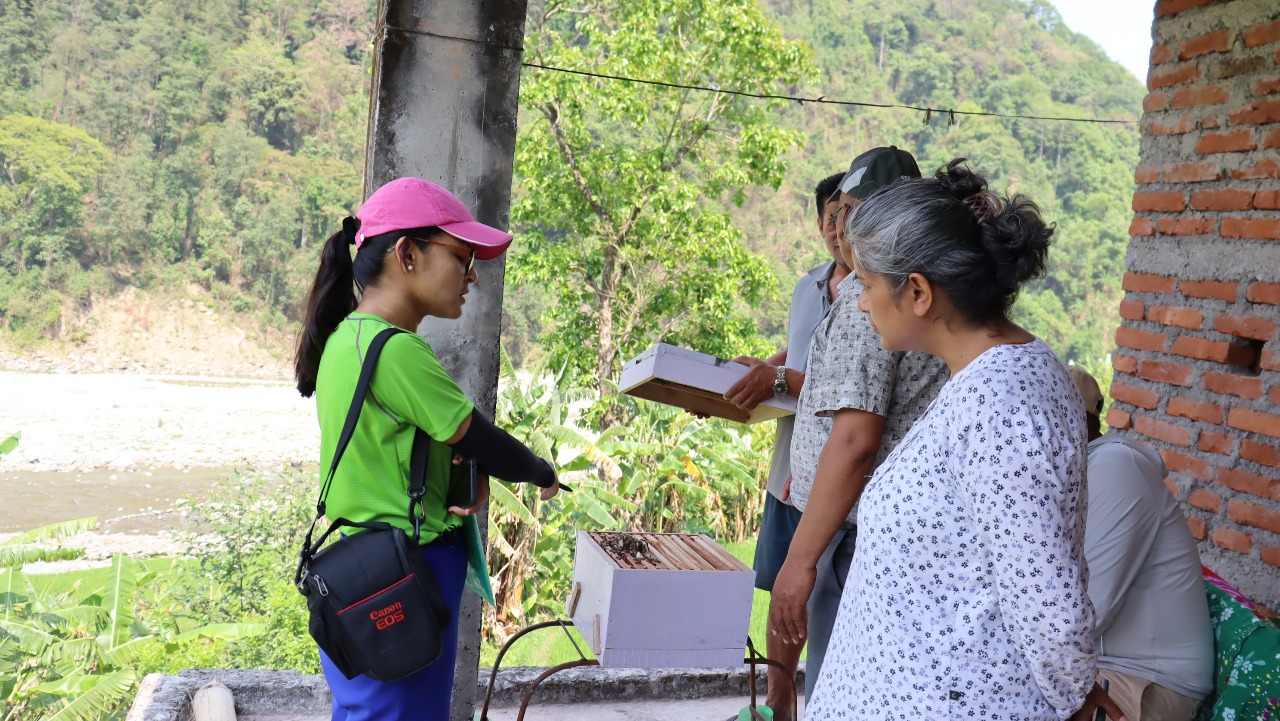
Prakriti Resources Centre (PRC) has worked with local women’s groups in different places of Nepal to strengthen their capacity and resilience, helping translate climate knowledge into practical action within their communities for years. Today, this investment is creating a ripple effect – women who were once trainees are becoming trainers themselves.
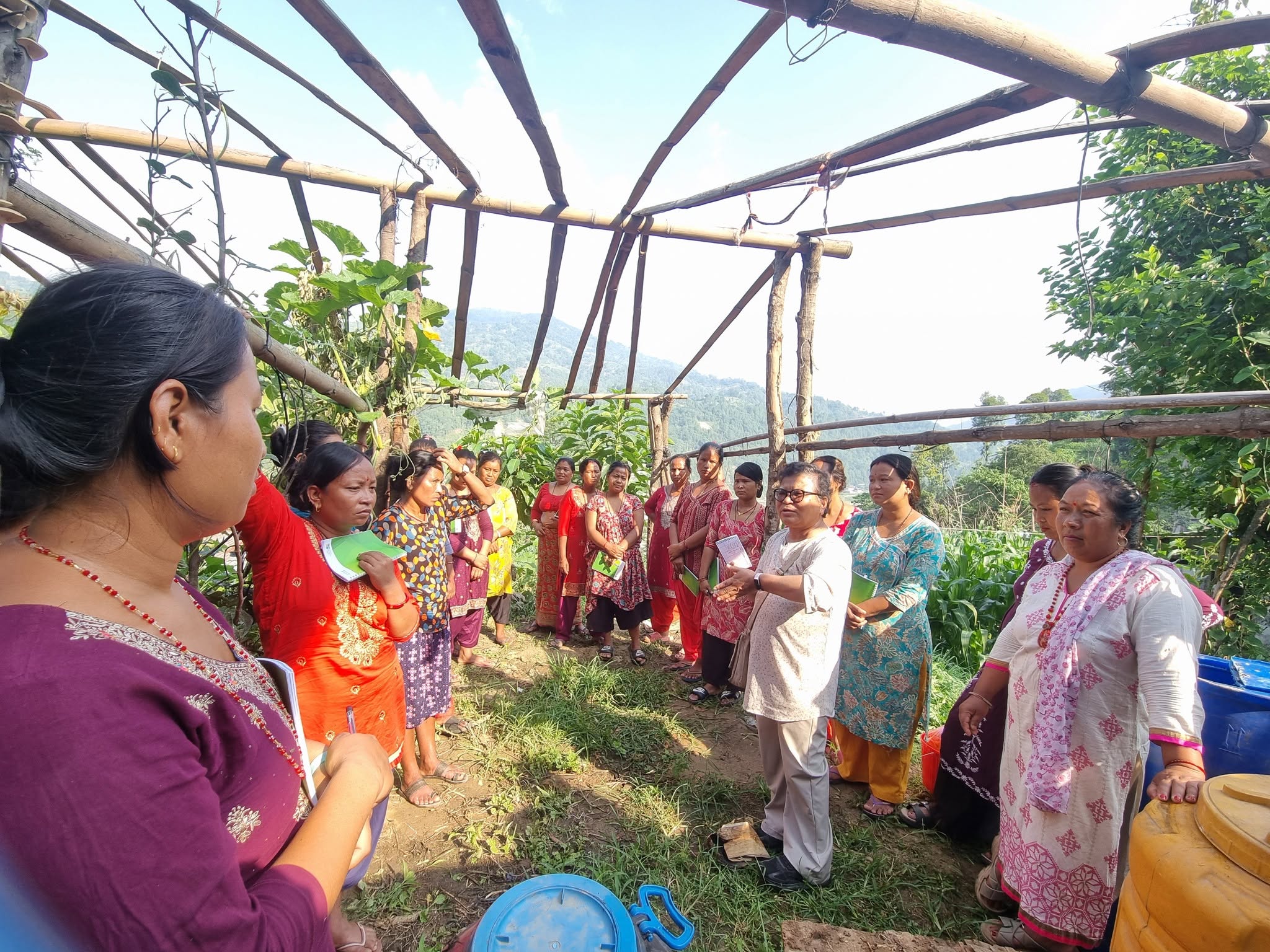
A notable example is emerging in Kavre, Banepa, where members of Mahila Jagaran Samuha, previously supported through PRC’s capacity-building efforts, are now sharing their knowledge and skills on nature-based farming with the Khadga Devi Krishak Mahila Samuha in Melamchi. They are moving beyond being recipients of knowledge to becoming community facilitators, supporting other women to adopt practical, climate-resilient farming practices through the ‘Bridging Engagement Across Community and National Actions for Climate and Energy Resilience in Nepal’ (BEACON) project.
Mahila Jagaran Samuha has successfully organized two sessions for the Khadga Devi Krishak Mahila Samuha so far. The first session was the orientation session that introduced the concept of nature-based farming, its benefits, and its relevance to women and local communities in terms of health, environmental sustainability, and livelihood opportunities. The other session offered the facilitating organization to teach the members of the Khadga Devi Krishak Mahila Samuha the procedure of preparing organic fertilizers and pesticides via practical and interactives methods. Throughout both sessions, members of Mahila Jagaran Samuha demonstrated their growing confidence, technical capacity, and the ability to support others.
This shift, from trainees to trainers is a powerful indicator of sustainable, locally led climate action. The impact is no longer limited to those directly reached by PRC, but knowledge is being transferred from one community to another, creating opportunities for more women to build practical skills, reduce dependence on chemical inputs, and strengthen their resilience to climate and environmental challenges.
More importantly, the experience demonstrates what sustained capacity-building can achieve when communities are empowered to lead. By investing in women as knowledge holders and facilitators, PRC is helping create a model where communities support communities, women empower women, and climate knowledge continues to grow beyond the life of an individual training intervention.
The story of Mahila Jagaran Samuha is therefore not simply about two training sessions. It is about a transformation in who holds, shares, and leads climate knowledge and the potential for that knowledge to continue spreading from one community to the next.