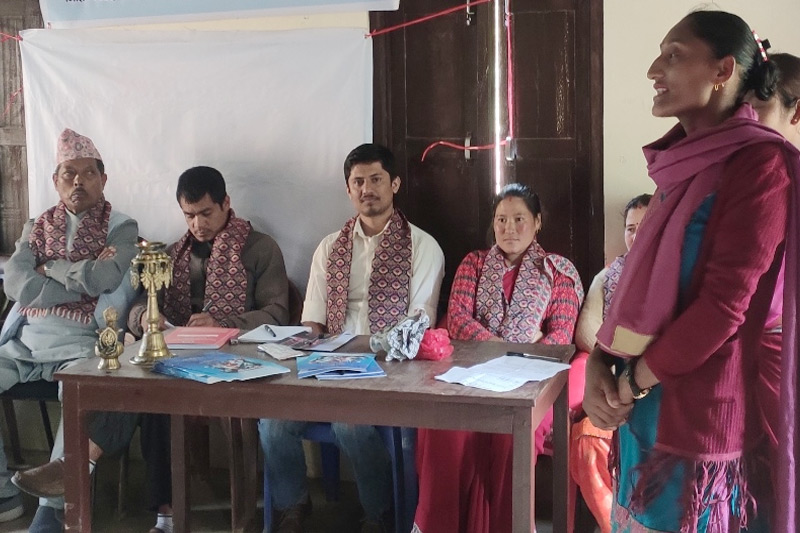
Pipra Rural Municipality and Gaushala Municipality in Mahottari District are most climate-vulnerable areas in Terai region, experiencing worsening droughts, heat waves, cold waves, floods, and localized flash floods. These climate-induced stresses severely disrupt agriculture, water security, livelihoods, and public health. The most affected are marginalized communities such as Dalits, women, land-poor farmers, persons with disabilities, and the elderly, whose adaptive capacity remains limited. In municipalities like Pipra and Gaushala, drought-driven water scarcity has intensified, with groundwater depletion, failing tube wells, degraded agricultural lands, emerging pests, and declining crop productivity. Many households face increasing food insecurity and rely on migration or daily wage labor as coping strategies. Despite Nepal’s progressive climate policies, local governments lack adequate capacity, resources, and institutional mechanisms to effectively localize climate adaptation and disaster risk reduction (DRR). The KSHAMATA Project aims to address these intersecting challenges by strengthening the resilience of vulnerable households and ecosystems against climate change and climate-induced disaster while also supporting local governments to adopt gender-just, climate-responsive governance systems.
Objectives:
The project’s overall goal is to contribute to improved resilience of vulnerable households and ecosystems through improved livelihoods and strengthened institutions.